How Wedding Venue Location Affects Your Guests’ Experience
How Location Influences Your Wedding Guests
A wedding venue location affects the guest experience well before anyone enters the reception room. Travel time, road access, parking, accessibility, nearby accommodations, and the trip home can all influence how easily guests take part in the day.
For couples comparing venues, location is worth evaluating from the guests’ perspective as well as their own. A beautiful setting may suit the wedding perfectly, but the experience becomes more complicated if a large part of the guest list faces difficult travel, unclear arrival instructions, limited parking, or few practical places to stay nearby.
How Venue Location Affects Guest Comfort and Convenience
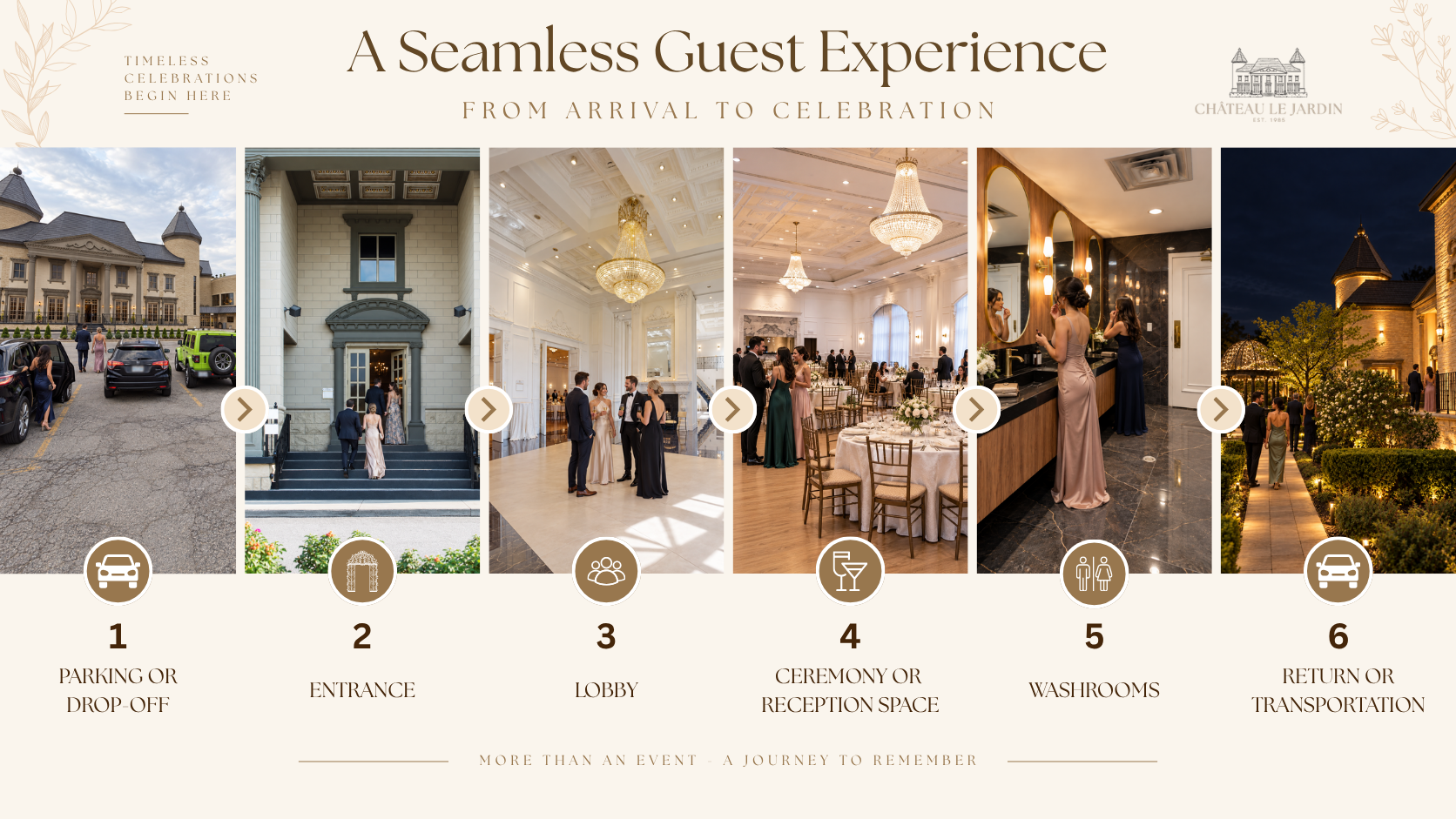
Guests experience a venue in stages. First they plan the trip. Then they travel, locate the property, park or get dropped off, enter the building, move between spaces, and eventually arrange their trip home.
Each stage can add ease or friction.
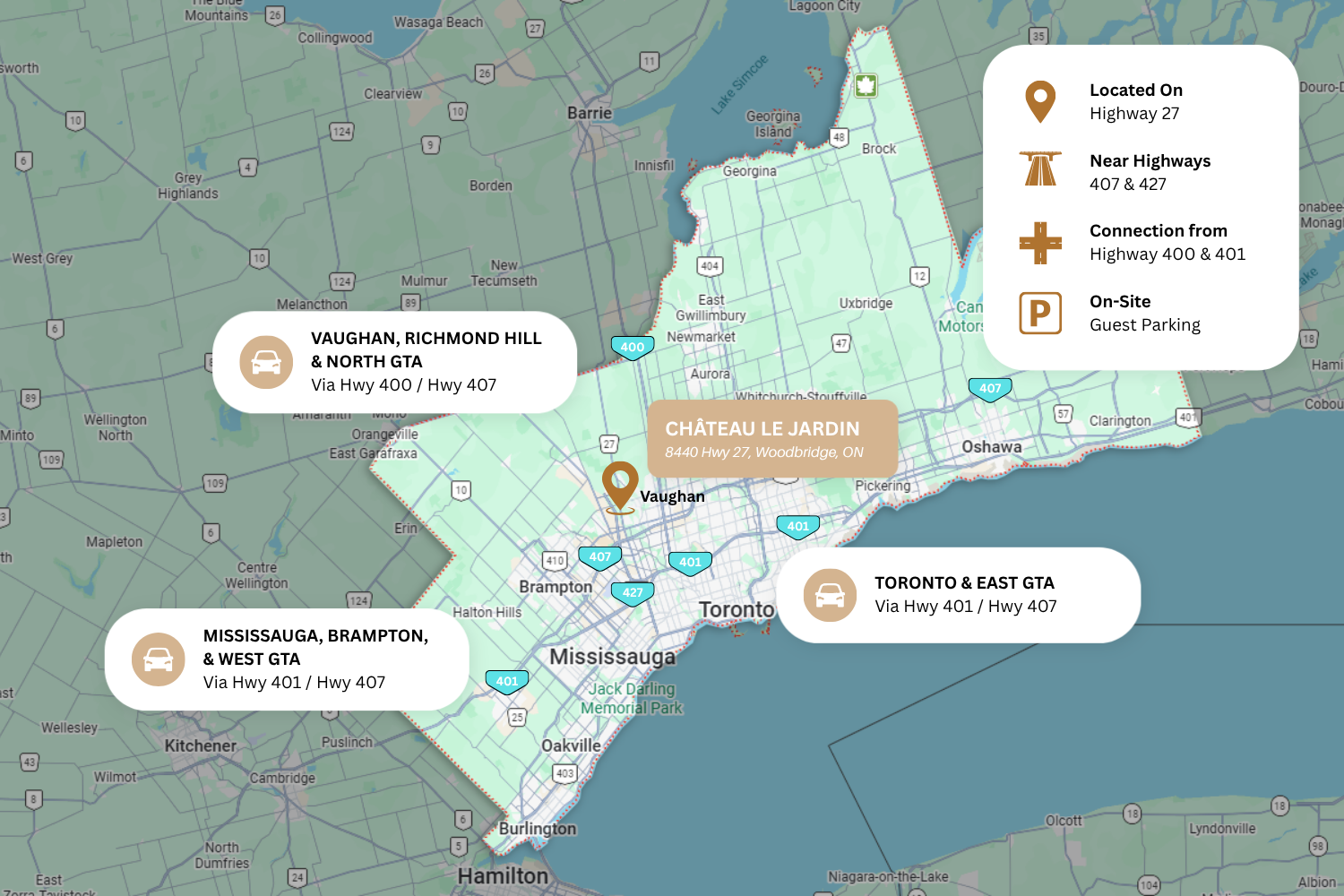
A practical wedding venue location should work with the way your guests are likely to attend the event. A couple whose families mostly live in Vaughan and neighbouring GTA communities may evaluate location differently from a couple expecting many guests from outside Ontario.
The useful question is not simply, “Is the venue close?” It is, “How practical will the full trip be for the people attending?”
How Travel Distance Can Shape the Wedding Day
There is no single travel distance that works for every wedding. A 30-kilometre trip can be straightforward in one situation and far less predictable in another. Road conditions, time of day, transportation arrangements, and where guests are travelling from all affect the experience.
Where are most of your guests travelling from?
Start with the geographic spread of the guest list.
If most guests live within the same part of the GTA, a venue reasonably connected to that area can reduce unnecessary travel. If guests are coming from Toronto, Peel, York Region, and farther away, there may be no location that is equally close to everyone.
Focus on the venue that creates the most practical overall journey rather than trying to minimize the distance for every individual guest.
How can travel affect arrival time?
Ceremonies are less flexible than many other parts of a wedding schedule. Guests who encounter traffic, confusing directions, or an unexpectedly long drive may arrive close to—or after—the planned start.
Invitation details and pre-wedding communication should reflect the actual route guests will take, not simply the distance shown on a map. Giving guests clear directions and enough time to arrive, park, and enter the venue can make the beginning of the event feel much more settled.
For couples still comparing the broader factors involved in venue selection, our guide on how to choose a wedding venue and when to book it covers layout, guest count, timing, services, and other early planning decisions.
Parking and Arrival Are Part of the Guest Experience
Parking may feel like a secondary venue feature during an initial tour. For guests, it is often one of their first direct interactions with the property.
Parking capacity and convenience
When reviewing wedding venue parking, ask more than whether a parking lot exists.
Consider whether parking is on site, how guests reach the entrance from their vehicles, whether accessible spaces are available, and what parking arrangements apply if several events are taking place at the property.
Guests wearing formal clothing, older relatives, families with young children, and anyone carrying gifts or personal items may experience a long or awkward walk differently from someone arriving alone.
Arrival flow and clear access
The transition from road to parking lot to entrance should be easy to understand.
Couples should know which entrance their guests will use, whether a drop-off point is available, and how guests will identify the correct event space after entering. Clear information provided before the wedding can remove unnecessary uncertainty from the first few minutes of the event.
Accessibility Should Be Considered Before the Wedding Day
Wedding venue accessibility is better evaluated as a complete guest journey rather than as a single feature.
Ontario’s guidance for making public spaces accessible addresses areas such as accessible parking and paths of travel. Building accessibility can involve separate requirements, so couples should ask the venue directly about the specific spaces their guests will use.
Consider how a guest with limited mobility would move through the visit:
- parking or drop-off area
- entrance
- lobby
- ceremony or reception space
- washrooms
- return to transportation
Ask about accessible parking, entrances, elevators where required, washrooms, and movement between event spaces. If particular guests use wheelchairs, walkers, canes, or other mobility aids, those needs are worth discussing before the wedding rather than assuming every part of the route will work.
Accessibility planning can also make the day easier for older guests, parents with strollers, and anyone who would benefit from a shorter or less difficult route through the property.
Nearby Accommodations Can Make Travel Easier
Nearby accommodations become more relevant when guests are travelling a significant distance, arriving from outside the GTA, or participating in wedding activities across more than one day.
Out-of-town wedding guests
For travelling guests, the venue and hotel effectively become connected parts of the trip.
A practical hotel location can reduce late-night driving and make arrival easier for people unfamiliar with the area. Couples expecting many travelling guests may want to review accommodation early enough to provide useful information with their wedding communications.
What to check when comparing nearby hotels
Distance on a map is only one factor. Consider the actual driving route between the hotel and venue, transportation arrangements, check-in timing, accessibility needs, and whether guests will need their own vehicles.
Ask whether the venue can recommend nearby accommodations or has existing relationships with local hotels. A recommendation does not automatically mean accommodation is included with the wedding, so rates, booking terms, and transportation arrangements should be confirmed directly with the hotel.
Think About How Guests Will Leave at the End of the Night
Arrival receives plenty of attention during wedding planning, but departure deserves the same consideration. Some guests will drive home. Others may use a taxi or rideshare, return to a nearby hotel, travel with a designated driver, or use group transportation arranged for the wedding. Before booking, ask where taxis and rideshares can collect guests, whether buses or shuttles can access the venue conveniently, and what the venue’s policy is regarding vehicles left overnight.
The right setup depends on the guest list. A wedding attended mainly by local guests can require a very different departure plan from one where a large portion of attendees are staying at the same hotel.
Talk to Our Wedding Team →Location Can Reduce Unnecessary Movement During the Wedding
Travel does not necessarily end when guests arrive at the ceremony.
If the ceremony, cocktail period, and reception take place at separate locations, guests may need new directions, additional parking, and extra travel time between stages.
Ceremony and reception at one venue
Holding the ceremony and reception at the same property can simplify the guest experience. Guests park once, become familiar with the venue, and move into the next stage without returning to their vehicles.
That can be particularly helpful for older relatives, guests with mobility needs, families with children, and people visiting the area for the first time.
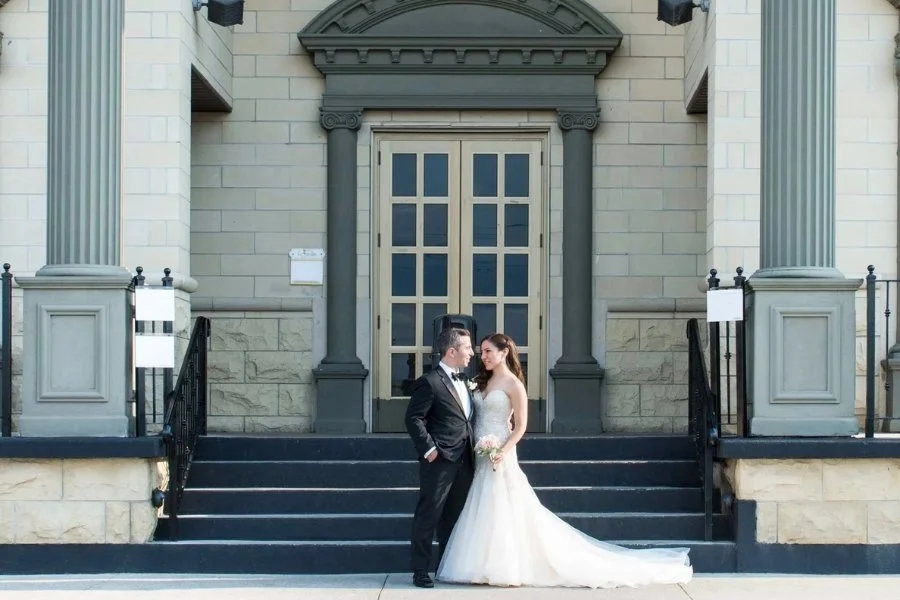
Château Le Jardin’s wedding venue in Vaughan can host both ceremonies and receptions, allowing couples to keep these parts of the celebration at one location when that arrangement suits their plans.
Separate ceremony and reception locations can still work well. They simply require more attention to travel time, directions, parking, and realistic transition time within the wedding schedule.
Evaluating a Wedding Venue Location in Vaughan and the GTA
A GTA wedding can bring together guests from several municipalities, which makes the idea of a “central” location dependent on the actual guest list.
When evaluating a Vaughan or Woodbridge venue, consider the routes guests are most likely to use and the time of the event. Road construction and traffic conditions can affect even familiar trips.
Closer to the wedding date, York Region’s road construction schedule and traffic cameras can help couples review current conditions before sending final travel reminders to guests.
How Château Le Jardin Supports Guest Convenience
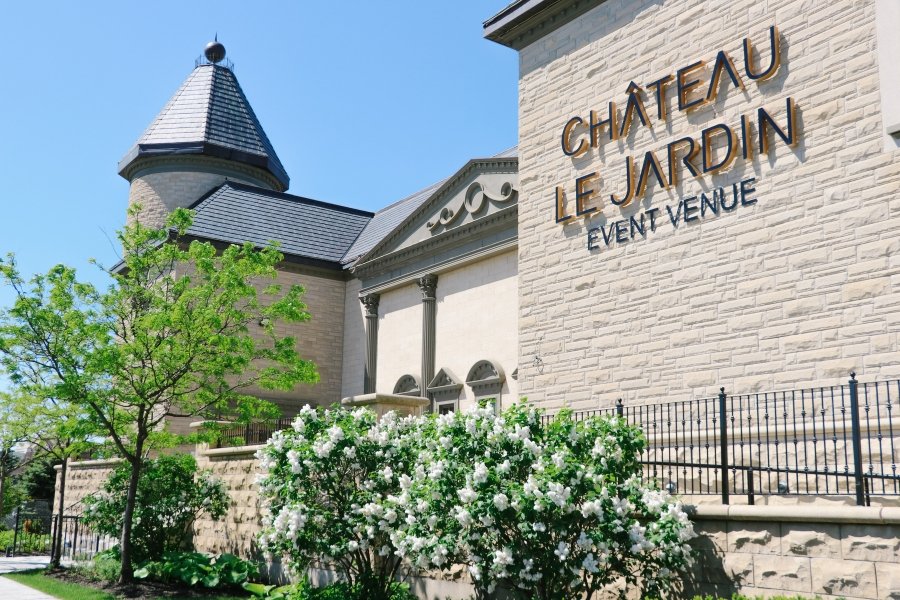
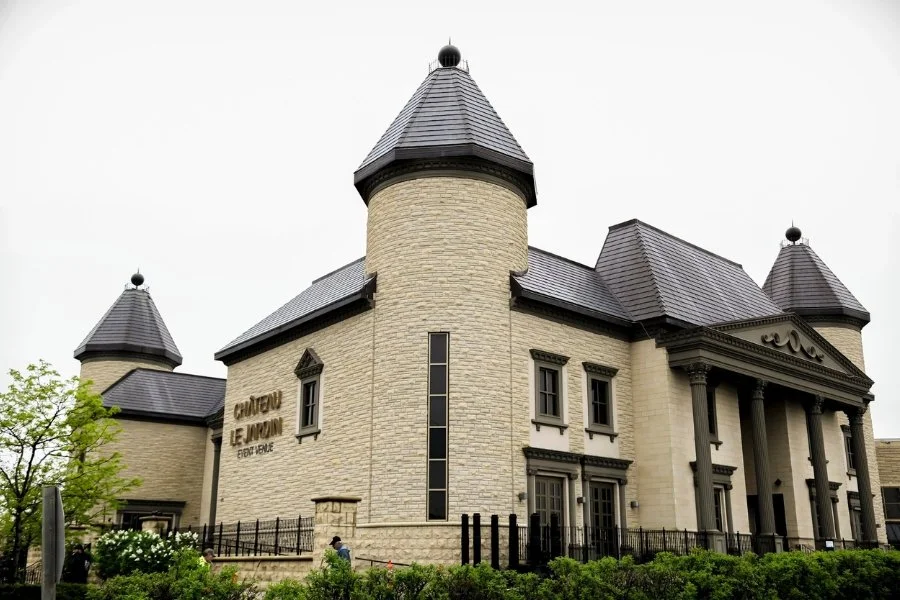
Château Le Jardin is located at 8440 Highway 27 in Woodbridge. The venue provides on-site guest parking, can host both the ceremony and reception, and can provide recommendations for nearby lodging.
Château Le Jardin has operated in Woodbridge since 1985 and serves weddings and other events across Vaughan, Toronto, and the Greater Toronto Area.
Those details are useful when evaluating the guest journey as a whole: how people arrive, where they park, whether they need accommodation, and how much movement is required once the celebration begins.
Questions to Ask About Location Before Booking a Venue
A location-focused venue review does not need to be complicated. Ask questions that reflect how your particular guests will use the property:
Answers should be considered alongside your guest list rather than in isolation. A feature that has little effect on one wedding may be important for another.
Plan the Location Around the People Attending
A wedding venue should support both the celebration inside the room and the guest journey around it. Travel, parking, accessibility, accommodations, arrival, and departure all contribute to how comfortably people experience the day.
Couples considering Château Le Jardin can discuss location, guest logistics, ceremony and reception planning, and other event details through a wedding consultation with the venue’s event team.
Frequently Asked Questions About Wedding Venue Location
-
There is no universal ideal distance. Consider where most guests live, the roads they will use, typical travel conditions, nearby accommodations, and any planned transportation. A slightly longer but straightforward journey can be easier than a shorter route with difficult access or several transfers.
-
On-site parking is useful when many guests will drive, but it is not the only factor to assess. Check capacity, accessible spaces, distance to the entrance, drop-off arrangements, and whether any rules apply to vehicles left after the reception.
-
Nearby hotels become more useful when guests are travelling from outside the area, the reception finishes late, or wedding activities extend across several days. The practical route between the hotel and venue matters more than distance alone.
-
Keeping both at one venue can reduce driving, parking changes, directions, and transition time for guests. Separate locations can work just as well when enough travel time is built into the schedule and guests receive clear transportation information.
-
Review the complete route guests will use: accessible parking or drop-off, entrance access, movement between event spaces, elevators where needed, washrooms, and the path back to transportation. Specific mobility needs should be discussed directly with the venue before booking.
Plan a Better Guest Experience at Château Le Jardin
Meet with Château Le Jardin’s event team to discuss your guest list, travel considerations, parking, accessibility, nearby accommodations, and how your ceremony and reception can work together at one location.
Book a Wedding Venue Consultation →